
Dental Bone Grafting in Pune & PCMC | Burute Dental
Dental bone grafting in Pune and PCMC, sinus lift and socket grafting, why it is needed, materials used and cost factors. Expert care by Dr. Mrunal Burute.
Dental Bone Grafting in Pune and PCMC is a niche specialty. Looking for reliable dental implants for deficient bone in Pimpri Chinchwad ? Burute Dental offer a durable and natural-looking solution for replacing missing teeth while helping restore your smile, chewing function, and confidence. With careful treatment planning and modern dental techniques, you can receive personalized full mouth dental implants and grafting procedures done and designed around your oral health and long-term needs.
MDS Prosthodontists
40+ Years of Dental Legacy
CBCT-Based Planning
Comprehensive Implant Rehabilitation
Do I Need a Bone Graft for My Dental Implant?
Many patients are told, “You don’t have enough bone for an implant.” This can sound alarming, but it is very common, and it is often treatable.
A dental bone graft is a small procedure that rebuilds lost jawbone so that it can hold an implant or support your teeth. At Burute Dental, Dr. Mrunal Burute, MDS Prosthodontist, is an expert in horizontal and vertical bone grafting, including bone lost to abscess or tooth loss, and sinus grafts. He is also skilled at keeping grafts stable and at gum management, two things that decide how well a graft heals. This page explains grafting in simple words so you can understand your options.
What Is Dental Grafting?
A graft is a material placed where bone or gum tissue is missing. Over the next few months, your body slowly replaces or grows into it, forming new, healthy, living tissue. Think of it as laying a strong foundation before building a house.
There are two main kinds:
- Hard tissue grafting (bone grafting): rebuilds the jawbone.
- Soft tissue grafting (gum grafting): rebuilds or thickens the gums.
Why Is Grafting Needed?
Bone is not permanent. It needs a tooth root and chewing forces to stay strong. Bone loss can happen because of:
Sinus position: in the upper back jaw, the sinus can sit very close to the ridge, leaving little height for an implant.
Bone resorption after tooth loss: once a tooth is gone, the bone around it starts to shrink. Much of the loss happens in the first year.
Disuse atrophy: when teeth are missing for many years, or a denture is worn, the unused jawbone gradually becomes thinner and weaker.
Abscess or infection: a long-standing infection at the root of a tooth can destroy the surrounding bone, leaving a hole or defect.
Gum (periodontal) disease: advanced gum disease slowly dissolves the bone that holds the teeth.
Fractures or injury: an accident or a broken tooth root can damage the bone.
Difficult tooth removal: a traumatic extraction can leave the socket damaged.
implant-focused expertise
CBCT-based planning
complex-case management
second opinions
transparent pricing
patient education
treatment alternatives
failed implant management
bone-deficient implant solutions
Types of Bone Grafting
- Socket grafting (socket preservation) Done right after a tooth is removed. The empty socket is filled with graft material to prevent the bone from collapsing. This keeps the area ready for an implant later.
- Horizontal bone grafting (ridge widening) When the jawbone is too thin, the width of the ridge is increased so an implant can sit safely with bone on all sides.
- Vertical bone grafting (ridge height) When the bone has lost height, it is built upward. This is a more advanced procedure that needs careful planning and skill.
- Sinus lift In the upper back jaw, the sinus membrane is gently lifted and graft material is placed underneath. This creates enough height for implants in the molar area. It can be done by a lateral or a crestal approach, depending on how much bone is already present.
- Defect grafting Bone lost to an abscess, cyst, gum disease or fracture is rebuilt by filling the defect, often with a protective membrane, a method called guided bone regeneration.
- Soft tissue (gum) grafting Thin or receding gums, or a lack of firm gum around a tooth or implant, can be corrected with a graft of gum tissue. This improves protection, comfort and appearance.
Materials Used in Grafting
The right material depends on your case. Common options include:
- Autograft: your own bone, taken from another area of your mouth. It heals very well.
- Allograft: processed bone from a tissue bank, tested for safety.
- Xenograft: processed bone mineral from an animal source, usually bovine. It is a slow-resorbing scaffold.
- Alloplast: synthetic, lab-made bone substitutes.
- Membranes: thin barriers that protect the graft and guide healing.
- PRF (platelet-rich fibrin): made from a small sample of your own blood. It is rich in healing factors and helps both bone and gum healing.
Dr. Madhura Burute or Dr.Mrunal will explain to you your clinical situation and give you information about all types of grafts and also advice you which is the preferred option for you so you can make a informed choice of graft material.
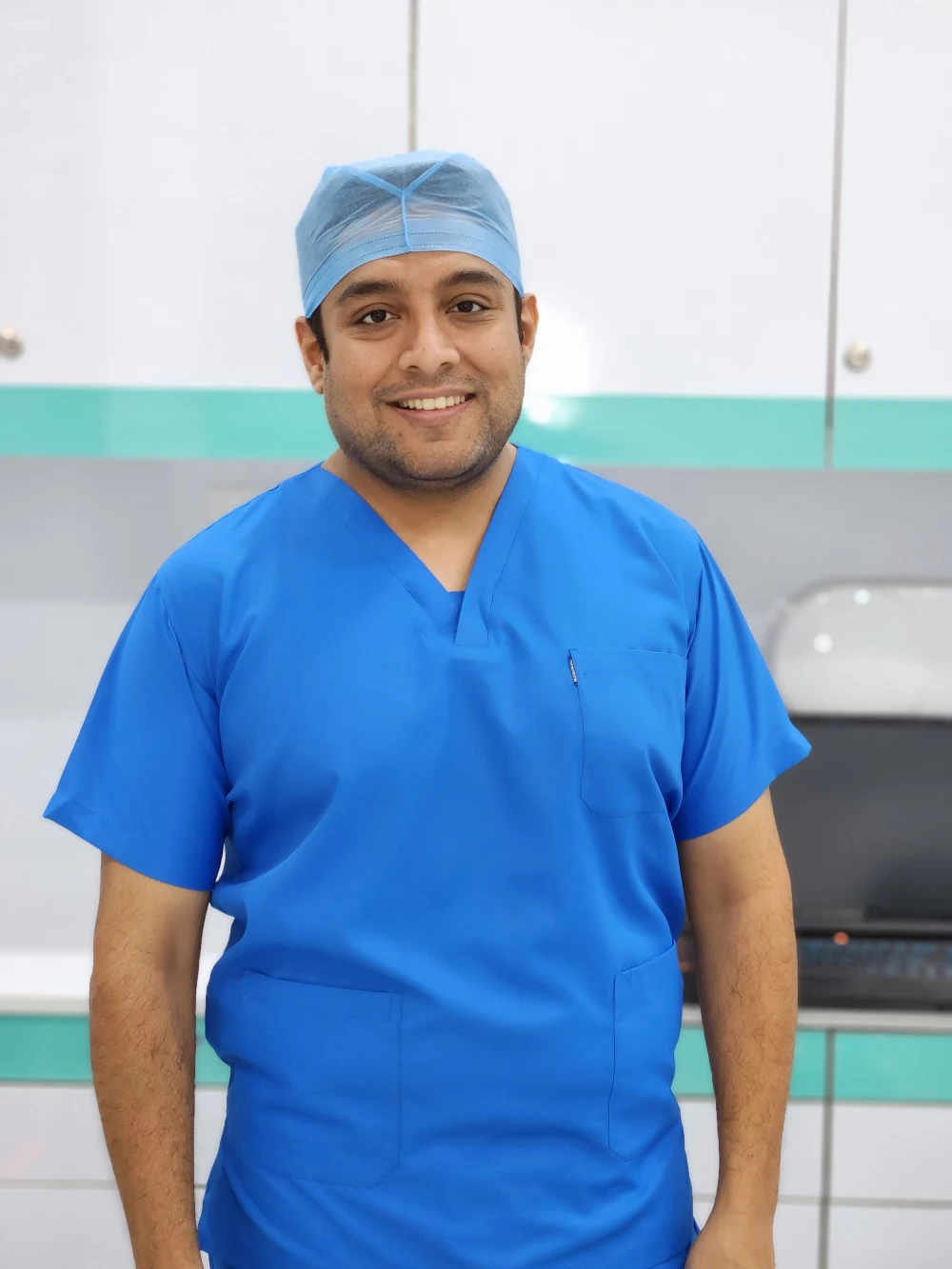
Why Dr. Mrunal Burute?
MDS Prosthodontist · Implantologist
Dr. Mrunal Burute is an MDS prosthodontist and implant dentist in Hinjewadi with extensive experience in implant treatment and complex implant rehabilitation.
The Burute Dental profile describes extensive implant experience, including thousands of implants and complex cases involving deficient bone, failed implants, full-mouth rehabilitation and advanced implant procedures.
His professional background also includes recognition and training associations with major implant companies, including Nobel Biocare and Dentsply.
The significance of this is not the title itself. It is the experience of dealing with different clinical situations.
Area of Expertise
3D implant planning
Complex surgery in deficient bone
Implants in infected bone
Single & multiple implants
Graftless solutions
Full-mouth rehabilitation
Grafting & sinus lift
All-on-4 / 5 / 6
Immediate implants
Immediate temporisation
Implants for diabetic & hypertensive patients
Wisdom tooth extraction
Failed & fractured implant management
The value of this experience is not simply the number of implants or grafting procedures performed. It is the ability to recognise that different patients require different treatment strategies.
Dr. Mrunal Burute’s Approach: Graft When Needed, Graftless When Possible
Grafting is a valuable tool, but it is not always necessary. Dr. Mrunal Burute prefers a graftless approach whenever it is clinically possible, especially in All-on-4 cases. Using angled (tilted) implants, narrow or short implants, and careful 3D planning, he can often place implants in the bone you already have. This can mean fewer procedures, a shorter treatment time, and less discomfort.
When grafting is truly the better option, for example for single implants in thin or lost bone, or for sinus areas, he plans it with CBCT imaging and does it carefully, with a focus on long-term results.
When Experience Becomes Particularly Important
You may benefit from a more detailed implant evaluation if you have been told:
“You don’t have enough bone.”
“You need a bone graft.”
“Your implant has failed.”
“You cannot have implants.”
“You need all your teeth removed.”
“You need All-on-4/All-on-6.”
A experienced surgeon who knows how to build high quality bone by grafting can replace any complex complicated case with deficient resorbed bone and give a sustainable prognosis to the implants and a prolonged life to the implant teeth.
Why Graft Stability Decides Success
The hardest part of bone grafting is not placing the material. It is keeping it still and protected while new bone grows. If the graft moves, gets squeezed by the gum, or is exposed, it can fail. This is a technique-sensitive step, and it is where experience matters most.
Dr. Mrunal Burute focuses on stabilising grafts predictably, even in difficult cases.
Depending on your situation, he chooses from several techniques:
- Sticky bone: graft particles are mixed with PRF made from your own blood, which binds them into a firm, mouldable mass that stays in place. He uses the full range of PRF preparations, including A-PRF, i-PRF, S-PRF and V-PRF, to make sticky bone and to speed up healing.
- Bone stacking kits: these are very technique-sensitive and need a lot of experience to give a stable result. In skilled hands, they help rebuild bone in thin or short ridges.
- Titanium mesh: a strong, shaped mesh that holds the graft in position and protects its space, useful for larger vertical and horizontal defects. Dr. Mrunal is a specialist in its use.
- Ridge expansion and ridge split: the narrow bone is gently widened so implants can sit in the centre of the bone, sometimes with little or no extra graft material.
The method is chosen case by case, based on the shape and size of your defect, not on a fixed routine.
Soft tissue care: the hidden key to a healthy graft
A graft needs healthy gum covering it. If the gum is stretched tight over the graft, it can open up and the graft can be lost. That is why Dr. Mrunal pays special attention to soft tissue:
Soft tissue grafting: when the gum is thin or lacking, he can rebuild it, which protects both the graft and the future implant.
The aim is a well-protected, stable graft and dependable bone augmentation results. Outcomes vary from patient to patient.
Periosteal release: the gum tissue is carefully released so it can cover the graft comfortably, without pulling.
Tension-free suturing: precise stitching that keeps pressure off the graft while it heals. His suturing is a major reason his grafts heal well.
What to Expect: The Process — Step by Step
01
Consultation and CBCT scan to measure your bone in 3D
02
Treatment planning to decide whether you need a graft, and which kind.
03
Discuss options, and get physician fitness if applicable
Treatment components and applicable costs are explained.
04
Procedure under local anaesthesia, so you stay comfortable and awake
What to expect- After grafting
Mild swelling and soreness for a few days are normal and are managed with medicines and simple aftercare.
Healing, usually 3 to 6 months depending on the graft, before the implant is placed. In some cases, the implant and graft can be done together.
Implant and final teeth, once the bone is ready.
Cost of Dental Grafting in Pune
The cost of grafting is not the same for every patient. Typical ranges:
- Socket grafting: ₹ 10,000 to ₹ 15,000
- Horizontal or vertical bone grafting: ₹ 15,000 to ₹ 25,000
- Sinus lift: ₹ 15,000 to ₹ 20,000
- PRF add-on: ₹ 10,000 onwards
- Soft tissue (gum) grafting: ₹ 10,000 to ₹ 20,000
What decides your cost:- Site and location of the graft in your mouth
- Size of the defect (how much bone is missing)
- Bone quality and your overall health
- Type of graft material used (own bone, donor bone, synthetic, membranes, PRF)
- Whether the graft is done alone or along with an implant
A fixed quote is given only after your examination and CBCT scan. We also offer flexible payment and EMI options.
Frequently Asked Questions
Is bone grafting painful?
The procedure is done under local anaesthesia, so you should not feel pain during it. Mild soreness afterwards is common and easy to manage.
Can every person get a graft?
Most healthy adults can. Conditions like diabetes or high blood pressure should be under control, and smoking can affect healing. We will guide you.
Will my body reject the graft?
Rejection is uncommon, because graft materials are designed to be accepted by the body. Infection or poor aftercare are more common reasons for problems, so follow-up matters..
Do I always need a graft for implants?
No. Many cases can be treated without one, which is why a proper CBCT-based evaluation is important.
How long does a graft last?
A well-healed graft becomes part of your own bone and can last for years, supported by good hygiene and regular check-ups.
Book an Implant Consultation at Burute Dental
Every plan is confirmed after a clinical assessment, imaging and implant selection. Reach out to arrange a call. Bring your previous reports if you have them. Understand your options before you decide.
Because the most important part of an implant is not simply placing it. It is planning it correctly. Our expert implant dentist in Hinjewadi will help you find what treatment best suits you.
Expert Implantologists
State-of-the-Art Technology for dental implants in Hinjewadi
Comprehensive Care
Patient-Centric Approach
Proven Track Record
Sterilization Protocols