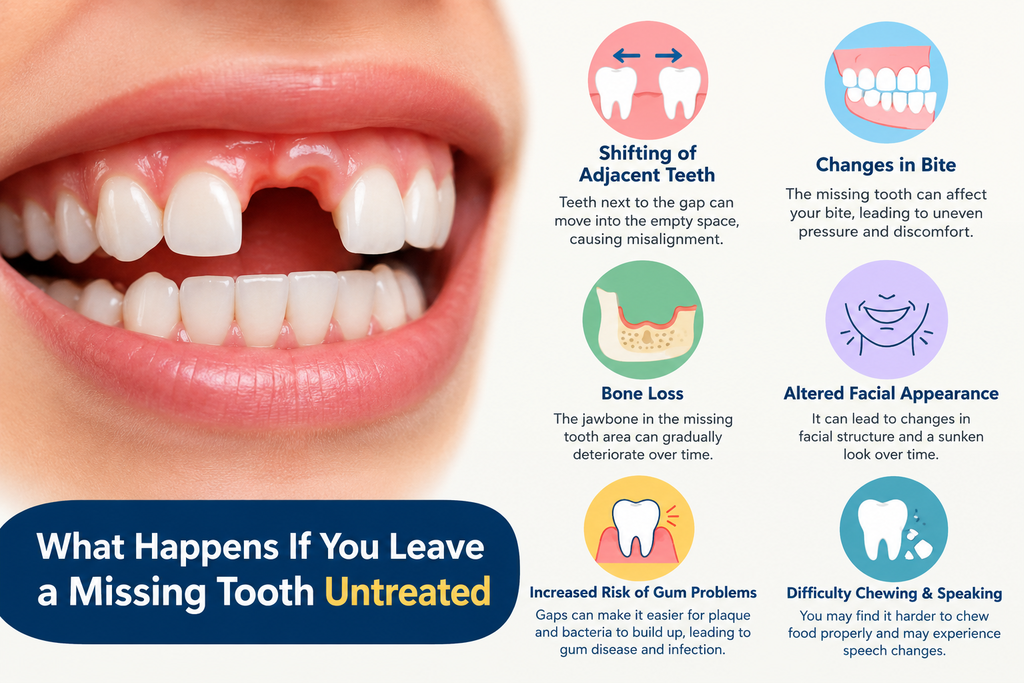
Losing a tooth can feel like an issue if there is no pain. Ignoring a missing tooth over time can slowly hurt your health. It can change how you bite, how you look and how you feel about yourself. When a tooth is missing, there is a space left behind. That space lets the teeth next to it move around. This movement can make it harder to eat food the way. It also affects the jawbone, which can cause the structure to get weaker over time. Whether you have lost one tooth or many, it is essential to know the problems and talk about good replacement options with a dentist.
Why Should You Replace a Tooth?
Healthy, well-aligned teeth work together to help you chew and talk. Your mouth’s structure. But if you’re missing a tooth, it can throw that structure out of whack. Adjacent teeth might shift into the space you lose. This could change the way your bite feels. It could also make it more difficult to keep your other teeth in line.
Replacing the tooth that is lost has control over function along with the preservation of a natural oral cavity.
1. Nearby Teeth May Start Shifting
One of the common issues you can expect to have from a missing tooth that goes untreated is the shifting of the adjacent teeth. Teeth will always want to shift into space. The teeth next to the gap, may shift into the space, and the tooth on the other side, or opposite it, may slowly slide down or up into it. This movement can affect your bite. Make flossing more difficult.
2. Jawbone Loss Can Occur
The roots of your teeth stimulate the jawbone around the tooth. When you lose the tooth that stimulation is lost. Eventually, the bone will slowly decrease in size. This is referred to as bone resorption. Bone loss around teeth can compromise the support for teeth in that area. May alter the shape of the jaw bone. Significant loss of bone may make future dental implant treatment more difficult.
3. Chewing May Become Difficult
Your chewing ability can be compromised by a missing tooth. You might find yourself naturally favoring the use of the side of your mouth. This can exert extra pressure on those teeth and cause discomfort when eating some foods. If multiple teeth are missing the effect on chewing efficiency may become more noticeable.
4. Your Bite May Change
Your teeth are meant to function when you bite and chew. May continue to settle for several years after the first tooth is extracted; some of your teeth may.. Pressure even out while biting. This can affect your bite. A modified bite could put pressure on some teeth and may cause difficulties with chewing comfortably.
5. Remaining Teeth May Experience Pressure
If you are missing a tooth, the other remaining teeth may need to take on more of the chewing load.
Note: Over time, additional pressure can lead to wear and other issues with the teeth when many teeth are missing.
Having a functional set of teeth can facilitate better distribution of the load when chewing.
6. Difficult to Clean Around the Gap
The position of a tooth might affect the gaps between adjacent teeth. Certain regions of your teeth might be more difficult to clean when your teeth move. Your brush and floss may not be reaching these places. Debris and plaque can build up. Having gaps in your teeth means that your oral care and regularly scheduled dental visits are even more crucial.
7. Your Smile May Change
Your Smile: If the tooth that has been lost is on show, then the appearance of your smile will be altered. Some people may turn self-conscious about speaking, smiling or communicating with others because of the space. Covering the gap left by the missing tooth can smile appearance and make you more confident.
8. Multiple Missing Teeth Can Impact Facial Appearance
If missing more than one tooth, alterations to the soft tissue and supporting bone may occur over time. Lower face and cheek support may be lost. This may be a reason why replacing teeth may be of benefit not just for chewing but also for support of the lower face.
What are the options to replace a tooth?
How do I choose the right replacement option? The correct replacement option will be based on: How many teeth are missing, the condition of your gums and jawbone, oral health, and your personal treatment requirements.
Common options include:
Dental Implants
They are used to replace a tooth root and support your crown or other restoration. When you have one or more teeth that you need to replace, dental implants can be used to do that.
A dentist will discuss the jawbone, gum, surrounding teeth and overall condition of the mouth before proceeding with treatment.
Dental Bridges
A dental bridge can replace the tooth adjacent to or supporting the bridge. Bridges may be used to restore the ability to chew. May be used to enhance the appearance of the smile.
Dentures
Complete Dentures: A possible treatment for multiple teeth or all teeth missing is a denture. A complete denture could apply to the patient.
Are Dental Implants for Everyone?
For a good number of patients, dental implants may be an option, but they are not right for every patient.
Your dentist may assess:
- Jawbone condition
- Gum health
- Number and location of missing teeth
- Overall oral health
- Existing dental conditions
- Treatment expectations
A dental checkup and consultation is necessary before choosing the implant treatment.
Can You Wait Before Replacing a Tooth?
Waiting to get treatment because the tooth does not hurt? Some individuals delay treatment because they do not feel pain when a tooth is missing. Missing tooth not painful? Wrong!
As teeth may move over time, bone loss can occur over time and chewing ability can change over time. The earlier you have an assessment the more your dentist can learn about your circumstances and options.
When Should You See a Dentist?
- A recently lost tooth
- One or more missing teeth
- Difficulty chewing
- Teeth shifting around a gap
- Gum problems around the missing-tooth area
- Difficulty speaking because of missing teeth
- Concerns about your smile or bite
Dental Implant Treatment in PCMC
If a tooth replacement is on your mind, a dental opinion will guide you to the best option for you.
Every dental implant treatment at Burute Dental Hospital, PCMC, is unique to the individual. Losing a tooth can feel like an issue if there is no pain. Ignoring a missing tooth over time can slowly hurt your oral health, your bite, how you look and how you feel in life. A missing tooth creates a space that lets teeth shift, mess with chewing and change the jawbone. Whether you have lost one tooth or many, it is essential to know the problems and talk about good replacement options with a dentist.
Frequently Asked Questions
Should I replace a missing tooth?
Your new tooth. The way of replacement can be different for everybody, but maintaining a gap, in the long run, is more prone to cause drifting of the teeth and result in loss of bone and bite problems. Your dentist can advise if replacement is recommended.
Can a tooth cause bone loss?
Yes. The jawbone in the spot where the tooth root used to be can shrink over time when there is nothing to stimulate it.
Are implants better than dentures?
What are the purposes of dentures and implants? Implants and dentures are used for different reasons. Which one is right for the patient depends on the health of the person, the number of teeth they are missing, the condition of their jawbone, their budget and what they want to achieve.
How long can I leave a tooth before replacing it?
There isn’t a timeframe that applies to all. Yet postponing an evaluation could indicate your tooth movement as well as bone changes to go through. Typically, it’s far better to get an evaluation associated with a dentist as an alternative than afterward.