
Losing a tooth can be upsetting. Perhaps you had an accident, or several years of decay have left you with no choice but to have a tooth removed. Either way, most people wonder at some stage: “Can I get dental implants and will they be suitable for me?”
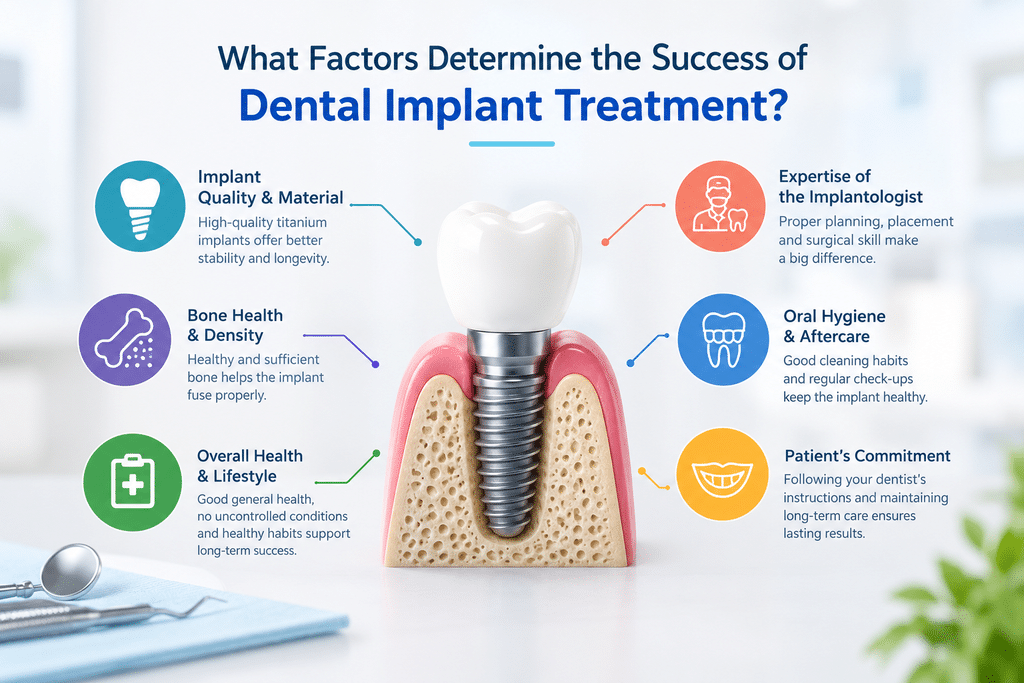
And the great thing is that most healthy people are up to the task. However, not everyone is ready right away. Prior to suggesting an implant, your dentist will evaluate several factors to ensure that the outcome will be comfortable, stable and durable. So, here are the 7 factors we examine in simple terms, so you can be prepared.
What Makes Someone a Good Candidate for Dental Implants?
What Is a Dental Implant? It’s an artificial tooth root that’s surgically inserted into your jawbone, with a crown attached on top of it. As this post is held firmly, three fundamentals must exist in your oral cavity healthy gums, a sufficient amount of bone and optimal healing capacity, which is what dentists refer to as eligibility for dental implants. We will take each one of those factors.
Factor 1: Healthy Gums
Gums are where your implant ‘lives’. Gum disease: Red, sore or bleeding gums, bad breath and loose teeth If you have gum disease, the infection can travel to the bone around the implant and cause it to fail. But that doesn’t always mean you can’t. Often you’ll need to get rid of your gum disease first. Then, when you’re healthy, you may be able to have the implants done eventually.
Factor 2: Sufficient Jawbone Thickness
This implant slowly fuses with the jawbone over time, and needs a certain amount of bone to be secured. If a tooth is absent for an extended period of time, the bone in the area will resorb leaving less available for implant placement.
Your dentist will X-ray or scan your jawbone. Thickness of the bone does not matter you can still have implants. Some procedures like a bone graft, can add to your bone before having implants.
Factor 3: Good Overall Health
What can affect the healing process? The dental implant operation is small, but your body needs to heal fully after the operation. Things that can interfere with healing include: heart disease, diabetes, osteoporosis and certain medications.
Actually, patients with these conditions can go ahead with getting implants and often do so successfully, in most cases when these conditions are well controlled. Just make sure you tell your dentist all of your medical history and medications to ensure safe and appropriate treatment.
Unsure where you are? An easy exam with an X-ray can help you get the answer.
Factor 4: Tobacco and Smoking Habits
These habits decrease blood flow to your gums, so you heal more slowly. This can also lead to more of a higher chance of implant failure and infection.
If you smoke, your dentist will probably recommend that you do not smoke until you are healed, or let you and your medical team decide when the best time to stop is. Even a brief hiatus helps.
Factor 5: Commitment to Oral Hygiene
A cavity won’t be an issue with an implant, but plaque can build up around the implant and infect the gum and bone. The best candidates are those who will brush twice daily, floss and keep their appointments with the dentist.
Imagine it like your new car, you are aware that it’s built to last but only when you keep it well maintained.
Factor 6: Mature Jaw
Is for grown-up people who have grown-up teeth. The bony growth of the jaws stops at the age of about late teens to early twenties. There’s no real age limit. If you’re in your 60s, 70s or older, and in good general health with healthy bones we can usually give you implants. The age on your birth certificate is nowhere near as important as your general health and the health of your bones.
Factor 7: Realistic Expectations and Time
It’s not an immediate process. Typically, the implant process occurs over a number of stages: assessment, placement, a healing period when the tooth implants will bond with the bone, and finally the fitting of the new crown. Healing period times can vary.
The payoff is worth it. With proper care, implants will function and feel like natural teeth and can provide decades of service.
Your Next Step: A Proper Consultation
An article can inform you what dentists consider, but it can’t determine whether you’d make a good dental implant candidate. At Burute Dental Hospital, we begin with a clean bill of health and the correct scans, explain your choices clearly, and never pressure you into a procedure you don’t need.
FAQs
Are dental implants safe for diabetics?
Usually yes, if you have well-managed blood sugar. Your dentist might consult with your primary care doctor before proceeding.
How old is too old for dental implants? We really don’t have a maximum age for implant placement. It’s got more to do with your health and bone structure. Usually, your jaw must be done growing.
What if I’ve been missing a tooth for years?
While you may have some bone loss, it’s still possible to get an implant with bone grafting. Check out our guide on what happens if you wait too long to replace a missing tooth.
How painful are dental implants?
Dental implants are placed using local anaesthesia, so there is no pain during the surgery. Some discomfort after the operation is common.
How do I know I am eligible?
A dentist is the only one who can know for sure after an exam and an X-ray or 3D scan.